
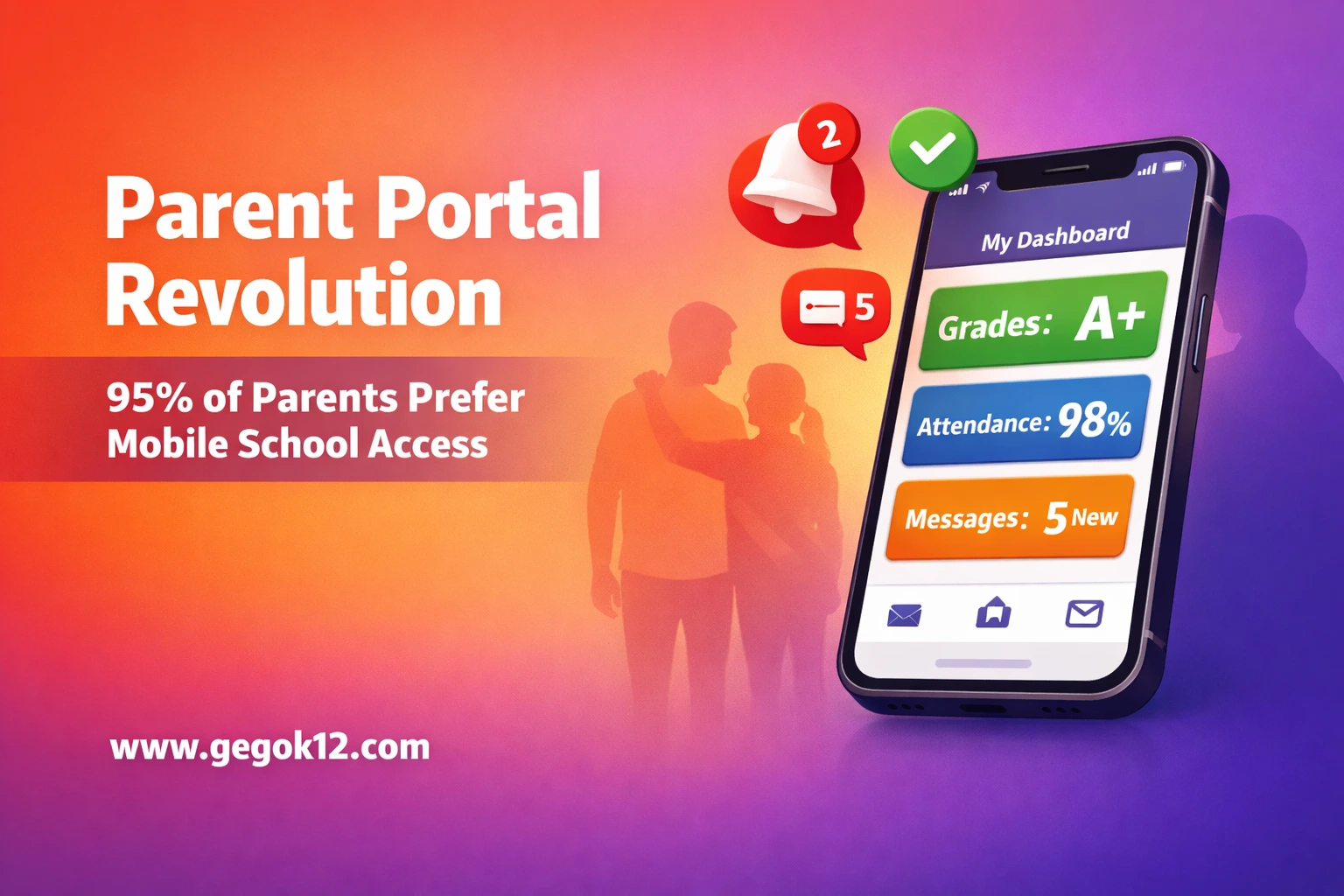
The paper backpack is dead. In 2025, 95% of parents own smartphones and expect real-time digital updates about their children’s education. Parent portals transform school-home communication from sporadic paper notices to instant, personalized engagement that keeps families connected, informed, and actively involved in student success. Schools implementing comprehensive parent portals report 60% higher family satisfaction, 35% fewer disciplinary incidents, and dramatically improved student outcomes through consistent parent involvement enabled by technology.
Traditional school communication—crumpled paper notices, forgotten announcements, once-yearly parent-teacher conferences—no longer meets modern family needs. Working parents juggling multiple jobs can’t attend weekday meetings. Paper notices get lost in backpacks. Phone calls during business hours go unanswered. Meanwhile, parents accustomed to instant banking updates, real-time delivery tracking, and on-demand entertainment expect similar immediacy and transparency from their children’s schools.
Parent portals bridge this expectation gap by providing 24/7 access to student information through web platforms and mobile apps. Parents check grades while commuting, receive attendance alerts as they happen, communicate with teachers through secure messaging, and stay informed about school events—all from devices they already carry everywhere. This digital transformation isn’t just convenient; research shows it fundamentally improves educational outcomes by strengthening the home-school partnership crucial to student success.
Real-Time Access Drives Parent Engagement
The most compelling parent portal benefit is instant visibility into student progress. Parents no longer wait weeks for report cards to discover their child is struggling. They see grades update as teachers enter them, view upcoming assignments before deadlines pass, and monitor attendance patterns that might indicate problems. This real-time transparency enables proactive parenting rather than reactive responses after issues become serious.
Studies consistently show that greater parental involvement associates with higher academic achievement, increased motivation, and better social-emotional outcomes. Schools reporting high parent engagement see 35% drops in disciplinary incidents and 78% of teachers say parental support improves classroom behavior. Parent portals facilitate this involvement by making engagement effortless—checking a mobile app requires far less commitment than scheduling school visits or waiting for scheduled communication.
The transparency parent portals provide also builds trust. When families can verify attendance, grades, and teacher feedback independently, they develop confidence in school accountability. This trust strengthens relationships and reduces conflicts arising from miscommunication or lack of information. Schools embracing transparency through parent communication apps report dramatically improved family satisfaction compared to institutions maintaining traditional communication barriers.
Mobile-First Communication Meets Parents Where They Are
While 95% of parents own smartphones, only 39% prefer email for school updates. Instead, 70% favor text messages or mobile app push notifications for urgent alerts, and 39% prefer apps for general school communications. This mobile-first preference reflects how families actually consume information in 2025—scrolling phones during commutes, lunch breaks, and evening downtime rather than checking email at computers.
Effective parent portals optimize for mobile experiences. Interfaces designed for small screens, push notifications delivering timely alerts, offline access for viewing downloaded information, and quick actions like acknowledging notices or approving field trips—all enable engagement during brief moments throughout busy days. Schools implementing mobile-optimized portals see 3-5x higher parent engagement compared to desktop-only systems.
Integration with school management software ensures information flows automatically from administrative systems to parent portals. When teachers mark attendance, parents receive alerts immediately. When grades update, notifications appear on phones. When important announcements post, families see them instantly. This automation eliminates manual communication tasks for school staff while ensuring families never miss critical information.
Streamlined Administration Benefits Everyone
Beyond communication, parent portals simplify administrative interactions that traditionally required phone calls, school visits, or paper forms. Fee payments process online through integrated payment systems—parents view invoices, pay via credit cards or digital wallets, and receive instant receipts without visiting offices or sending cash through children. Automated fee management reduces late payments while eliminating staff time handling cash and manual receipts.
Event registrations, permission slip approvals, form submissions, contact information updates—all tasks that once required paper and manual processing now complete digitally in minutes. Parents update emergency contacts from phones immediately rather than waiting to return paper forms. They approve field trips with button clicks rather than tracking down physical permission slips. This convenience for families also represents massive time savings for school administrative staff.
Indian schools managing complex operations across CBSE, ICSE, and State Boards particularly benefit from portal automation. Different curriculum requirements, varying assessment systems, and diverse administrative procedures that create confusion with paper systems become manageable through digital portals providing families exactly the information relevant to their children’s specific programs and grade levels.
Two-Way Communication Strengthens Partnerships
Traditional one-way communication—schools broadcasting information to families—limits engagement. Modern parent portals enable genuine two-way dialogue through secure messaging between parents and teachers. Parents ask questions about assignments, share concerns about student behavior, or provide context about home situations affecting school performance. Teachers respond directly without phone tag or after-school meetings, building relationships through consistent small interactions.
This ongoing communication prevents misunderstandings that escalate into conflicts. When parents can clarify confusion immediately, small questions don’t fester into major complaints. When teachers can share positive feedback frequently, relationships strengthen beyond problem-focused conversations. The cumulative effect of many small positive interactions creates trust and partnership that traditional communication methods struggle to achieve.
Some advanced parent portals include translation features ensuring communication reaches multilingual families in preferred languages. In diverse Indian schools serving families speaking Hindi, Tamil, Telugu, and regional languages, automatic translation eliminates language barriers that previously excluded non-English-speaking parents from school involvement.
Supporting Student Success Through Visibility
When parents access detailed academic information, they can support learning effectively at home. Viewing upcoming assignments lets them ensure children complete homework. Seeing quiz scores in real-time enables intervention before comprehensive exams. Understanding curriculum covered in class allows reinforcement through home discussion and practice.
This academic monitoring particularly benefits students who need extra support. Parents identify struggling subjects early and arrange tutoring. They notice missed assignments and provide organizational help. They see attendance patterns suggesting problems and address underlying issues. Early intervention enabled by portal visibility prevents small academic gaps from becoming large learning deficits requiring intensive remediation.
Student information systems integrated with parent portals ensure families view comprehensive records—grades, attendance, behavior notes, health information, assessment results. This holistic view enables parents to understand the complete picture of their child’s school experience rather than fragments gleaned from intermittent communication.
Security, Privacy, and Access Control
Parent portal security is paramount given the sensitive student information involved. Quality systems implement role-based access ensuring parents see only their own children’s data, encrypted communication protecting information in transit, secure authentication preventing unauthorized access, and audit trails tracking who accessed what information when.
Indian schools must balance transparency with student data privacy requirements. Systems should allow granular control—perhaps divorced parents with custody agreements receive different access levels, or older students gain privacy controls over certain information. Flexible security settings accommodate complex family situations while maintaining appropriate confidentiality.
Schools implementing portals must clearly communicate privacy policies to families. What data is collected? How is it stored? Who can access it? What happens if parents suspect unauthorized access? Transparency about data handling builds trust essential for widespread portal adoption.
Implementation Success Factors
Successful parent portal deployment requires more than technical implementation. Schools must promote portal benefits to encourage adoption, provide training helping families use features effectively, maintain accurate data ensuring portal information is reliable, respond promptly to technical support requests, and gather feedback for continuous improvement.
Some families face digital access barriers—limited internet connectivity, language difficulties, or low technical literacy. Schools should maintain alternative communication methods for families unable to use portals while working to expand digital access through free school management tools accessible via basic smartphones, community Wi-Fi programs, and parent training sessions.
Integration with comprehensive open-source school ERP systems like GegoK12 ensures parent portals connect seamlessly with attendance, academics, fees, and communications rather than operating as disconnected tools requiring duplicate data entry.
The Future of School-Home Connection
Parent portals represent present reality, not future vision. Schools maintaining paper-based communication increasingly face parent frustration, reduced engagement, and competitive disadvantages as families choose institutions offering digital transparency and convenience. The 2025 educational landscape demands mobile-first, real-time, two-way communication meeting family expectations shaped by consumer technology experiences.
Beyond current capabilities, emerging features will further enhance parent engagement—AI chatbots answering common questions instantly, personalized recommendations for supporting individual student needs, predictive analytics alerting parents to potential issues before they materialize, and virtual meeting capabilities enabling parent-teacher conferences from home.
The schools thriving in coming years will be those embracing technology not as replacement for human connection but as enabler of more frequent, more meaningful, more effective engagement between families and educators working together toward student success. Parent portals are the foundation of this transformation—turning sporadic, impersonal, one-way communication into ongoing, personalized partnerships that research proves dramatically improve educational outcomes.
If your school still sends paper notices home in backpacks, you’re not just behind the times—you’re missing opportunities to engage 95% of parents who already expect and prefer digital access to their children’s education. The parent portal revolution isn’t coming. It’s here. Join it.