
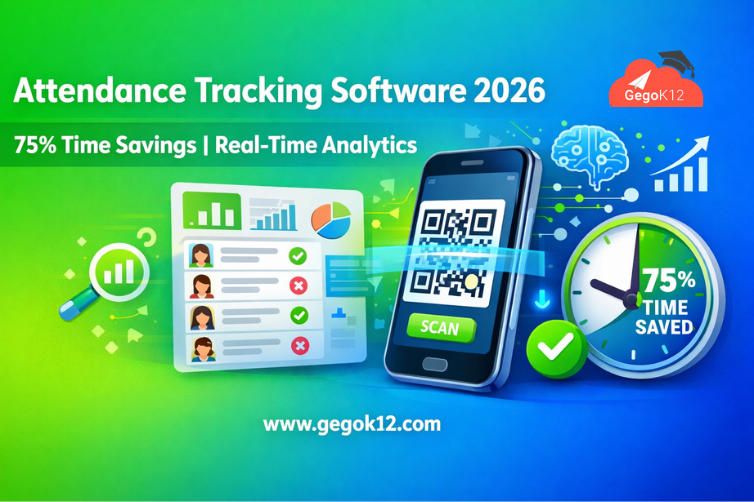
Attendance tracking software revolutionizes how schools monitor student presence, moving from time-consuming paper registers to instant digital systems saving up to 75% of administrative time while providing real-time analytics identifying at-risk students weeks before human observers notice concerning patterns. The attendance software market reaches $1.5 billion in 2026 as institutions worldwide abandon legacy processes for QR code scanning, biometric authentication, and AI-powered predictive analytics transforming attendance from tedious burden into strategic tool improving outcomes through early intervention and automated parent engagement.
Traditional methods—teachers calling names, marks recorded in paper registers, office staff transcribing records—waste enormous time while creating accuracy problems and delayed notifications. Modern platforms eliminate these inefficiencies through automation providing instant accuracy, immediate parent alerts, and comprehensive analytics integrated with school management systems creating unified educational ecosystems.
The Attendance Crisis
Research consistently links attendance to academic success—students missing 10% of school days (approximately 18 days annually) show significantly lower achievement, higher dropout risks, and reduced college readiness. Yet many schools lack systems identifying chronic absenteeism until patterns become severe. Manual tracking compounds problems through inherent inefficiencies. Teachers spend 5-10 minutes per class on roll calls—accumulating to hours weekly that could serve actual instruction. Paper registers create transcription errors. Delayed parent notification means families learn about absences days or weeks later, preventing timely interventions.
The COVID-19 pandemic accelerated digital adoption as schools discovered automated systems’ superior efficiency. Post-pandemic, institutions continue leveraging these platforms recognizing permanent benefits. Schools implementing comprehensive digital attendance management report dramatic improvements—time savings, accuracy, parent satisfaction, and student outcomes through early pattern identification enabling proactive support.
Modern Tracking Technologies
QR Code Systems
QR code tracking represents the most accessible approach, requiring only smartphones students already carry. Each student receives unique QR codes that they scan using phone cameras or school devices. Scans instantly record attendance, timestamp entry, and log data without manual teacher intervention. Studies show QR systems are “10x faster” than paper methods while “virtually eliminating human error” since each code uniquely identifies students preventing attendance fraud.
Schools implementing QR attendance reclaim 5-10 minutes per class period—hours weekly available for instruction. Implementation proves straightforward and affordable using standard printers and existing devices, making QR systems attractive for budget-conscious institutions seeking digital modernization without substantial capital investments.
Biometric and RFID Technologies
Sophisticated schools deploy biometric systems using fingerprint scanners or facial recognition providing highest security while eliminating cards students can lose or share. Biometric authentication uniquely identifies individuals, ensuring physical presence matches attendance records.
RFID technology embedded in student ID cards enables contactless scanning as students enter buildings. Readers detect cards within proximity ranges allowing seamless entry without students stopping individually. This bulk processing makes RFID ideal for high-traffic points where hundreds arrive simultaneously. These advanced systems command higher upfront costs but deliver long-term value through superior accuracy, reduced fraud, and operational efficiencies particularly valuable for larger institutions.
Mobile App-Based Attendance
Teacher-friendly mobile applications transform attendance from classroom disruption into seamless process completing in seconds. Teachers tap absent students’ names on smartphones and submit attendance while monitoring arriving students. Mobile apps integrate with school communication platforms enabling automated parent notifications instantly rather than waiting for end-of-day processing. Parents receive texts within minutes—”Sarah marked absent Period 2 Math”—allowing immediate follow-up.
AI-Powered Predictive Analytics
The 2026 frontier centers on artificial intelligence analyzing patterns predicting which students risk chronic absenteeism before problems solidify. Machine learning algorithms examine attendance history, grade performance, discipline records, family engagement—identifying subtle warning signs invisible to human observers. Predictive models flag students showing early indicators—missing Mondays frequently, declining attendance percentages—weeks before traditional monitoring would notice problems.
Schools receive alerts enabling early interventions (transportation assistance, counseling, family engagement) preventing absence escalation rather than reacting after students have missed substantial instructional time. Research shows early intervention dramatically improves outcomes. Students identified and supported at first signs avoid chronic absenteeism at far higher rates than those receiving interventions only after patterns prove severe. AI-powered school management platforms integrating attendance with broader student data provide holistic insights enabling targeted support addressing root causes.
Real-Time Parent Engagement
Modern platforms transform parent-school communication. Automated instant notifications sent via text, email, or app alerts inform families immediately when students miss classes—often before parents realize absences occurred. This real-time visibility enables rapid response—parents confirming legitimate illness, discovering transportation problems, or uncovering truancy demanding immediate intervention.
Beyond absence alerts, platforms provide families continuous visibility through web portals showing complete histories, tardiness patterns, and comparisons to averages. This transparency builds trust and enables partnership—families tracking attendance independently can initiate conversations about emerging patterns. Integration with student information systems ensures attendance connects with grades and behavior, providing complete engagement pictures.
Implementation Strategy
Successful adoption requires thoughtful planning beyond purchasing software. Schools should assess current processes, evaluate technology options matching needs and budgets, develop rollout plans including training and family communication, pilot with limited groups, and continuously optimize based on usage.
Change management proves crucial. Comprehensive training demonstrating how technology reduces workload overcomes resistance. Family communication explaining new systems and addressing privacy concerns prevents confusion. For budget-conscious schools, free open-source platforms like GegoK12 provide sophisticated attendance functionality without licensing costs.
Integration with School Ecosystems
Attendance platforms deliver maximum value when integrated with broader operations. Data should flow to student information systems, connect with learning management systems, sync with communication platforms, and feed analytics dashboards. This ecosystem approach transforms attendance from isolated data point into integral component of holistic student monitoring. When attendance connects with academic tracking, schools identify correlations enabling targeted interventions addressing both attendance and learning gaps simultaneously.
Return on Investment
Time savings alone justify investments. Teachers reclaiming 5-10 minutes per class redirect that time toward instruction or student support. For schools with 100 teachers conducting 5 classes daily, that’s 500-1,000 minutes (8-17 hours) daily—equivalent to full-time positions worth tens of thousands annually.
Beyond efficiency, improved detection directly impacts funding. Many jurisdictions base per-pupil funding on attendance—schools with chronic absenteeism lose money from state allocations. Platforms reducing chronic absenteeism by even small percentages recover substantial revenue while improving outcomes, creating double benefits financially and educationally.
Conclusion
The $1.5 billion attendance software market reflects universal recognition that manual processes waste time, miss patterns, delay interventions, and provide inadequate visibility that modern families and educational standards demand. Schools maintaining paper registers find themselves alone as competitors leveraging real-time systems demonstrate measurably superior outcomes.
For schools beginning digital journeys, success requires understanding available technologies, selecting solutions matching needs and budgets, implementing strategically with training and communication, integrating with broader school management ecosystems, and continuously optimizing. Schools making thoughtful investments today build foundations for operational excellence, improved outcomes, and competitive advantages that compound over years.
The future of attendance tracking isn’t coming—it’s here. Join the 75% time savings revolution.