
Teacher burnout reaches crisis levels with 53% of K-12 educators reporting exhaustion according to RAND’s 2025 State of the American Teacher survey, making teaching the most burned-out profession in America per Gallup research. The profession faces unprecedented challenges—overwhelming workloads where 86% of districts report open positions forcing remaining teachers to cover additional classes, inadequate support where educators fund their own classrooms as budgets get cut, student behavior challenges with half of teachers rating classroom conduct as fair or poor, and impossible work-life balance where 46% cannot enjoy private lives compared to just 13% of similar working adults.
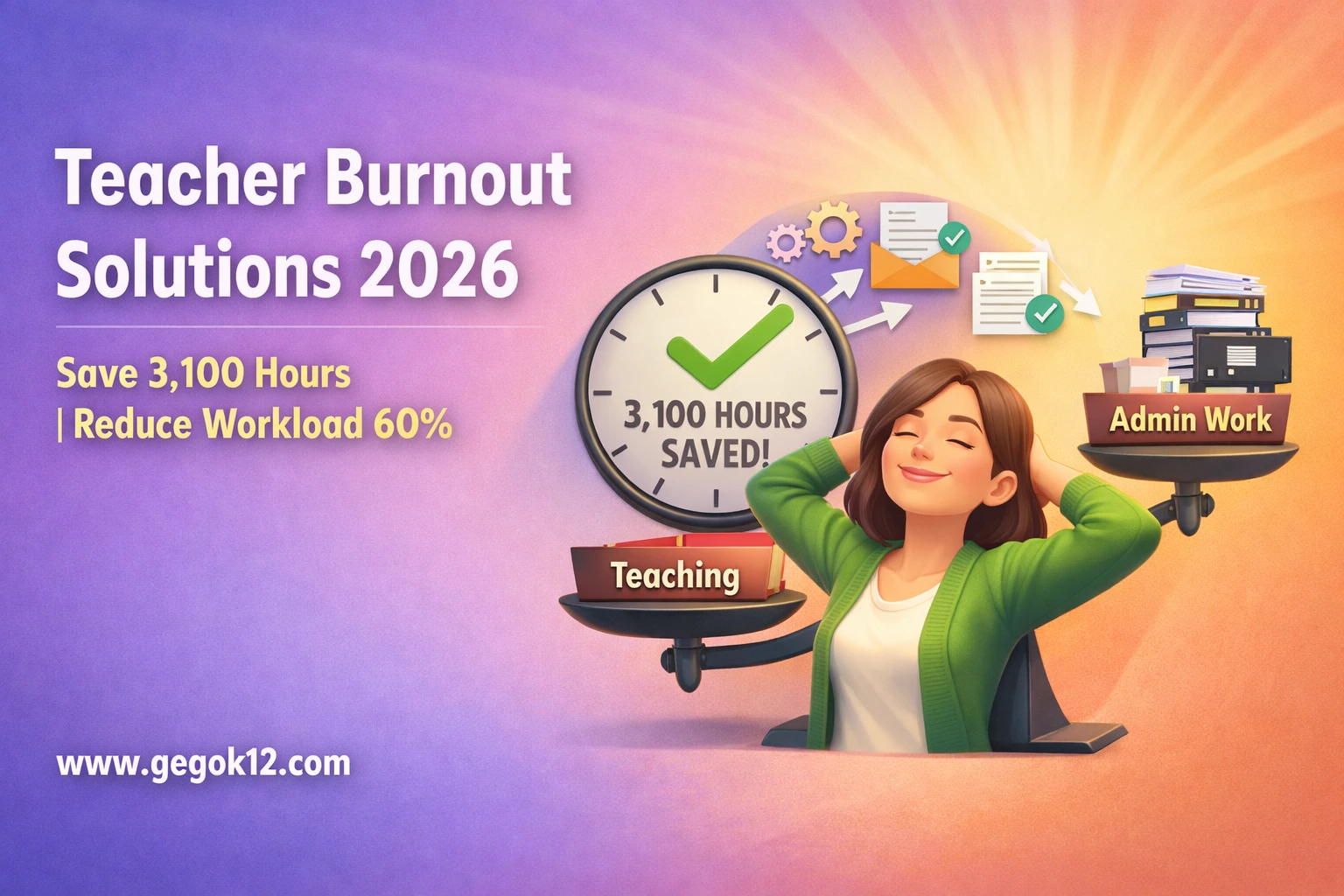
Technology solutions offer powerful interventions. Schools implementing automated attendance systems, digital grading platforms, streamlined communication tools, and AI-powered assistance report saving teachers 3,100 hours annually—equivalent to freeing nearly four months previously consumed by paperwork. These efficiency gains redirect educator time toward actual teaching, student relationships, and professional development rather than drudgery consuming nights and weekends.
The economic stakes are substantial. Districts lose $25,000 for each teacher who quits, with replacement costs including recruitment and decreased effectiveness when experienced educators depart. For districts with 14% annual turnover, that’s millions lost to preventable resignations technology-enabled workload reduction could prevent.
Understanding the Crisis
Burnout manifests as exhaustion resulting from prolonged stress depleting personal and professional resources. Research shows 44% of K-12 teachers very often or always feel burned out—highest among 14 occupations surveyed—with female teachers experiencing particularly severe burnout at 55% compared to 44% of males.
Overwhelming workloads drive the crisis. Teachers spend evenings, weekends, and vacations on lesson planning, grading, communications, and administrative paperwork. The digital shift post-pandemic added technology integration challenges without reducing traditional workload, piling new responsibilities atop existing unsustainable burdens. Staffing shortages mean remaining teachers cover additional classes and handle extracurricular duties previously shared across larger teams.
Insufficient support compounds stress. When administrators fail providing backing, resources, or quality technology tools, teachers feel isolated. The absence of modern school management systems forces teachers to waste time on tasks automation could handle instantly.
Technology Reducing Administrative Burden
Automated Attendance Systems
In schools with 500 students, teachers spend more than 3,100 hours annually taking attendance—equivalent to 1.5 full-time positions just calling names. Digital attendance systems eliminate this waste through QR code scanning or mobile app check-ins completing in seconds rather than 5-10 minutes per class.
Teachers reclaiming 5-10 minutes per class redirect that toward instruction or individual support. Across entire schools, thousands of hours return to education rather than paperwork. Automated systems provide bonus benefits—real-time parent notifications, instant administrative visibility, and accuracy eliminating transcription errors.
Digital Grading Platforms
Digital platforms auto-grade objective assessments providing instant student feedback while saving hours per assignment. For subjective assessments, digital rubrics and comment libraries accelerate grading by eliminating repetitive feedback writing. Digital report cards save teachers 10+ hours per term by automating grade compilation, calculation, formatting, and distribution.
Streamlined Communication Tools
Parent communication represents major time sink. School communication platforms enable mass communications reaching all families simultaneously rather than individual messages. Broadcast announcements about assignments, activities, or schedule changes reach hundreds in minutes rather than hours of individual outreach.
Automated messaging features send scheduled communications without teacher action—assignment reminders, test notifications, grade updates—keeping families informed while requiring zero ongoing teacher time. FAQ databases and chatbots answer common questions automatically, reducing email volume while providing families instant responses.
AI-Powered Administrative Assistance
AI handles increasingly sophisticated tasks. AI lesson planning assistants generate customized plans based on curriculum standards and student readiness—providing starting points teachers refine rather than creating from scratch. AI grading assistance evaluates written responses, flagging areas needing human review while handling straightforward assessment automatically.
Administrative AI schedules parent conferences eliminating back-and-forth emails finding available times. It generates progress reports summarizing performance and suggesting interventions. Meeting note-taking AI records discussions, identifies action items, and distributes summaries automatically.
Improving Engagement Through Technology
Beyond administrative relief, technology improves teaching effectiveness—factors directly affecting teacher satisfaction. Teachers report lack of student engagement as major frustration. When lessons fall flat, teachers feel ineffective and question professional competence.
Interactive educational technology transforms passive consumption into active participation. Digital whiteboards, educational apps, gamified learning, and simulation tools create engaging experiences impossible with traditional approaches. Learning management systems enable personalized paths adapting to individual student needs, reducing frustration when entire classes struggle with material either too advanced or too basic.
Work-Life Balance Through Automation
Technology’s greatest intervention enables genuine work-life separation—letting teachers leave school when contractual hours end rather than carrying work home nightly. Automated grading means teachers don’t spend evenings scoring tests. Scheduled communications mean teachers aren’t composing messages late nights. Digital resources mean teachers aren’t creating materials every weekend.
The psychological impact proves profound. When teachers spend evenings with families, pursue hobbies, exercise, rest, they return refreshed rather than exhausted. Work-life balance proves critical for job satisfaction and burnout prevention. Schools implementing comprehensive open-source school platforms report teacher satisfaction improvements alongside efficiency gains.
Strategic Implementation
Start with High-Impact, Low-Complexity Solutions: Begin with technologies offering immediate substantial time savings without extensive learning curves. Automated attendance and digital gradebooks deliver quick wins building momentum before introducing complex tools. Quick successes overcome resistance and prove technology helps.
Provide Comprehensive Training: New technologies without adequate training create frustration. Invest in thorough training covering strategic use maximizing value. Ongoing support through accessible help resources and responsive assistance helps teachers overcome obstacles as confidence grows.
Choose User-Friendly, Integrated Platforms: Teachers need intuitive tools working as expected. Integrated cloud-based platforms where multiple functions share common interfaces prevent context-switching and duplicate entry plaguing disconnected systems.
Respect Teacher Input: Include teachers in selection decisions ensuring tools match real workflows. When teachers feel heard and see their input shaping implementations, resistance decreases and adoption improves dramatically.
The Lumia Example
Innovative apps like Lumia—launched in Arizona where teacher turnover reached 14%—demonstrate technology supporting mental health beyond reducing administrative work. Lumia functions as virtual teachers’ lounge where educators offer advice, support, and mentorship. Teachers post strategies, ask questions, and connect with mentors.
With 400 Arizona teachers already seeking support, Lumia demonstrates demand for community-building technology. Virtual platforms connect educators across schools finding colleagues facing similar challenges. This professional community combats isolation contributing to burnout while providing practical support.
Conclusion
Teacher burnout isn’t inevitable—it’s preventable through strategic technology deployment. The 3,100 hours schools save annually through automated attendance alone represents just one example. Add digital grading, streamlined communications, AI assistance, and integrated platforms, and time savings fundamentally change teachers’ experiences.
The question isn’t whether technology can help—evidence proves it can. The question is whether schools will invest strategically in tools addressing actual pain points or continue expecting heroic effort compensating for systemic inefficiencies technology could eliminate. Schools making thoughtful investments position themselves for improved retention, enhanced satisfaction, better outcomes, and sustainable quality that burnout-driven turnover undermines.
Teachers become teachers to teach—not to drown in paperwork. Technology enables them to do what they love. That’s the burnout solution education needs in 2026.