
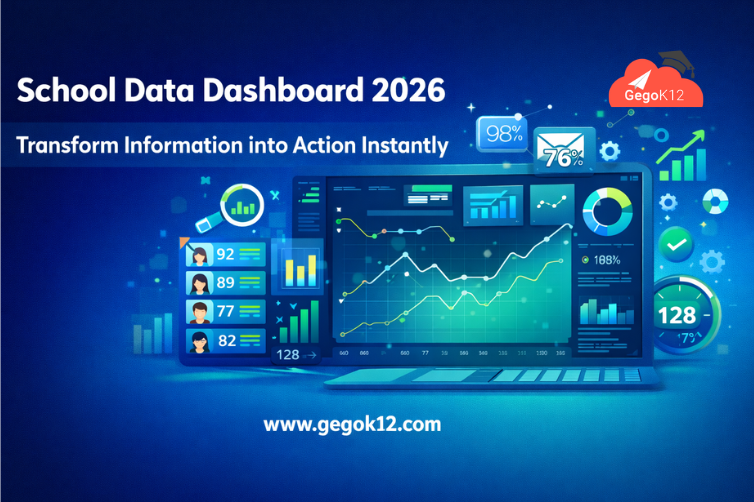
School data dashboards revolutionize educational decision-making by consolidating fragmented information from attendance systems, grade books, behavior logs, assessment platforms, and student information systems into unified visual interfaces providing instant insights previously requiring hours of manual report compilation. In 2026, successful schools leverage real-time analytics identifying at-risk students within days, measuring intervention effectiveness through continuous monitoring, tracking progress toward goals with live metrics, and communicating transparently with stakeholders through interactive visualizations transforming raw data into actionable intelligence.
The modern educational landscape generates enormous data volumes—daily attendance, assignment grades, behavior incidents, standardized assessments—but most schools struggle translating this wealth into meaningful insights. Information sits scattered requiring manual extraction and analysis consuming administrative hours while producing static reports outdated the moment they print. Data dashboards solve these problems by automating aggregation, providing visual interfaces making patterns immediately apparent, enabling drill-down analysis, updating continuously, and democratizing access so educators at all levels can explore relevant metrics without depending on district analysts.
The Data Fragmentation Crisis
Schools drown in disconnected sources – attendance systems track presence, grade books manage academics, behavior platforms log incidents, assessment tools measure proficiency, student information systems maintain demographics. All valuable individually but limited when isolated from broader context that comprehensive analysis would provide.
Traditional reporting compounds fragmentation. Administrators wanting attendance trends by demographics must export data, manually match records, analyze in spreadsheets, create charts, and repeat whenever data updates. This labor-intensive workflow discourages regular analysis, delays insights, and limits exploration to predetermined questions. The result: schools make critical decisions based on incomplete information, outdated snapshots, or gut feelings rather than comprehensive current data. Data-driven decision making remains aspirational rather than operational reality for most institutions.
Core Dashboard Capabilities
Unified Data Integration
Dashboard platforms connect with all school systems – SIS, learning management, assessment tools, attendance, behavior tracking—automatically extracting and synchronizing data continuously without manual exports or imports. Real-time connectivity eliminates staleness where weeks-old data drives decisions about rapidly evolving situations.
Quality dashboards understand educational terminology – “NWEA math percentile,” “chronic absenteeism,” “proficiency level”—without requiring custom configuration. Pre-built integrations with major platforms (PowerSchool, Google Classroom, Canvas, i-Ready, MAP) simplify implementation compared to generic business intelligence tools requiring extensive customization.
Visual Analytics and Drill-Down Exploration
Human brains process visual information far more efficiently than numerical tables. Dashboards present data through charts, graphs, heat maps making patterns instantly apparent. Color coding highlights areas needing attention—red indicates concerning metrics, green shows strong performance. Trend lines reveal whether situations improve or deteriorate. Comparative displays show how groups differ from benchmarks.
Interactive exploration enables follow-up questions without requesting new reports. Clicking attendance charts showing schoolwide rates drills down to grade levels, then specific students with concerning patterns. Filters adjust displays showing only specific subgroups – English learners, students with disabilities, economically disadvantaged. This exploratory capability transforms static reporting into dynamic conversation with data.
Role-Based Access and Personalization
Different stakeholders need different information at appropriate levels. Superintendents require district-wide summaries. Principals need building-level metrics. Teachers want class-specific data. Students and parents benefit from personalized views showing only their own information.
Dashboard platforms implement role-based permissions ensuring users see relevant appropriate data. Personalized landing pages display metrics most relevant to specific roles—teachers see their classes automatically. This personalization increases adoption by making dashboards immediately useful rather than requiring significant effort extracting relevant insights.
Predictive Analytics and Early Warnings
Advanced dashboards move beyond historical reporting toward predictive analytics identifying students at risk before problems become severe. Machine learning models analyze patterns across thousands of students and years of data, identifying leading indicators predicting outcomes – which attendance patterns correlate with dropout, which grade trajectories indicate concerns.
Early warning systems automatically flag students meeting risk criteria, enabling proactive support. Rather than discovering struggling students after failing grades appear, predictive systems identify concerns weeks earlier when interventions prove more effective preventing failures rather than remediating after damage occurred.
Intervention Tracking and Effectiveness
Schools implementing support interventions – tutoring, counseling, mentorship—need visibility into effectiveness justifying investment. Dashboard modules track participation, measure target metric changes, and compare outcomes against similar non-participating students providing evidence basis for decisions.
Dashboards showing students receiving reading intervention demonstrate whether participants actually improve literacy scores compared to matched peers. If data reveals minimal impact, schools investigate implementation quality or redirect resources toward more effective alternatives. When data confirms strong results, schools confidently expand successful programs.
Transformative Use Cases
Identifying At-Risk Students
Principals use dashboards filtering for students with concerning metrics – below proficiency, attendance under 90%, multiple behavior referrals, declining grades. Filtered lists provide targeted intervention opportunities. Clicking individual students displays comprehensive profiles combining attendance, academics, behavior in single views enabling informed decisions.
Early identification proves transformative. Rather than waiting until students fail courses, dashboards surface concerns at first warning signs when relatively minor interventions prevent escalation toward outcomes requiring intensive expensive interventions with lower success probabilities.
Monitoring Program Impact
District leaders implementing new curriculum need timely feedback. Dashboards tracking relevant metrics—reading scores, course passage rates—updated continuously provide real-time monitoring rather than waiting for annual evaluation reports.
Schools setting improvement goals – increasing attendance to 95%, achieving 80% proficiency – use dashboards tracking progress throughout years. Mid-year data revealing insufficient progress enables adjustments – intensified interventions, strategy modifications – potentially salvaging goal achievement when end-of-year evaluation would reveal failures without correction opportunity.
Transparent Stakeholder Communication
School boards, parents, and communities expect data transparency. Dashboards enable this through shareable views and scheduled reports visualizing progress on key metrics. Rather than dense spreadsheets overwhelming audiences, visual dashboards communicate trends clearly regardless of data literacy levels.
Board presentations incorporating live displays demonstrate current performance rather than static reports prepared weeks earlier. Parent engagement improves when families access dashboards showing their children’s progress rather than waiting for intermittent report cards. This transparency builds trust and partnership.
Integration with Management Ecosystems
Dashboards deliver maximum value when integrated with comprehensive school management platforms rather than standalone tools. Unified platforms where SIS, learning management, communication systems, attendance tracking, and fee management share common databases naturally enable comprehensive analytics without complex integration projects.
Cloud-based school ERP systems offer particular advantages. Cloud platforms provide computational power needed for complex analytics without expensive local servers. Automatic updates ensure latest analytical capabilities deploy without IT intervention. Multi-device access enables stakeholders to explore dashboards from anywhere using computers, tablets, or smartphones.
Implementation Best Practices
Start with Clear Questions: Identify specific decisions dashboards should inform. Do you need to identify at-risk students early? Measure intervention effectiveness? Track improvement goals? Starting with concrete use cases focuses implementation on delivering immediate value.
Ensure Data Quality: Dashboards amplify data quality problems—garbage in, garbage out. Audit source system data identifying inconsistencies and accuracy issues. Establish ongoing governance maintaining quality through validation rules, regular audits, and staff training.
Provide Training and Support: User adoption determines success. Comprehensive training demonstrating navigation, interpretation, and use for actual decisions overcomes resistance and builds confidence. Ongoing support through documentation, tutorials, and responsive assistance helps users gradually expand analytical capabilities.
Iterate Based on Feedback: Collect feedback about which visualizations prove most valuable, which metrics require addition, which reports generate confusion. Iterate configurations based on actual usage patterns rather than theoretical best practices.
For budget-conscious schools, open-source school management platforms like GegoK12 provide sophisticated analytics integrated with comprehensive operations without commercial licensing costs.
Conclusion
The 2026 educational landscape demands data literacy as fundamental institutional competency. Schools lacking real-time visibility into performance metrics find themselves making critical decisions based on outdated information when competitors leveraging comprehensive dashboards operate with superior insights enabling more effective strategies, faster interventions, and measurably better outcomes.
The data dashboard transformation isn’t coming—it’s here. Schools implementing unified analytics consolidating fragmented data into actionable intelligence position themselves for operational excellence and competitive advantages that compound over years. The question isn’t whether to adopt dashboards but how to implement strategically, integrate with broader digital transformation initiatives, and build data literacy ensuring investments translate into actual improvements.
Transform your information into action. The future belongs to schools that will.