
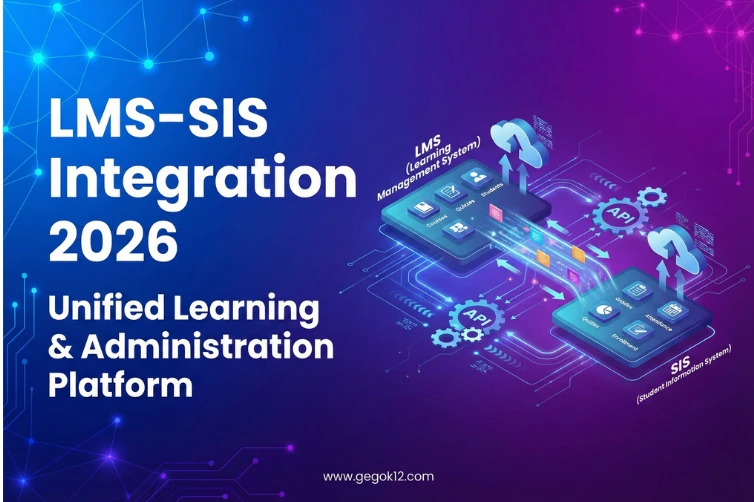
Learning Management Systems evolve from simple content repositories into intelligent learning ecosystems integrating seamlessly with Student Information Systems, creating unified educational experiences where academic content, assessment data, enrollment information, and administrative processes flow effortlessly across platforms. The LMS market grows to $27.08 billion by 2035 at 6.24% CAGR, driven primarily by demand for integrated solutions eliminating data silos that historically plagued educational technology stacks forcing redundant data entry, synchronization failures, and fragmented user experiences frustrating educators, students, and administrators alike.
In 2026, the educational technology landscape matures beyond disconnected point solutions toward comprehensive ecosystems where LMS platforms managing course delivery, content creation, assessment, and engagement integrate deeply with SIS platforms handling enrollment, grades, transcripts, and administrative records. This integration eliminates the friction where teachers manually transfer grades from LMS to SIS, where students access different portals for course materials versus academic records, and where administrators struggle extracting holistic insights from fragmented data scattered across isolated systems that cannot communicate effectively.
Successful implementations in 2026 require understanding integration architecture fundamentals, API capabilities enabling system communication, data synchronization strategies ensuring consistency, workflow automation eliminating manual transfers, and user experience design creating seamless interactions across formerly separate platforms. Schools implementing comprehensive school management platforms with native LMS-SIS integration report 40-60% reductions in administrative workload while dramatically improving data accuracy, stakeholder satisfaction, and educational outcomes through insights impossible to extract from siloed systems.
Understanding LMS and SIS: Core Functions and Integration Needs
Learning Management Systems manage the instructional side of education—course content, assignments, assessments, discussions, multimedia delivery, progress tracking, and student-teacher interactions. Modern LMS platforms like Canvas, Moodle, Blackboard, Google Classroom, and Schoology provide tools for creating engaging learning experiences, delivering content across devices, facilitating collaboration, and tracking learner progress through comprehensive analytics revealing which students struggle, which content proves most effective, and where curriculum adjustments improve outcomes.
Student Information Systems manage the administrative side—student demographics, enrollment, attendance, grades, transcripts, scheduling, compliance reporting, and parent communication. SIS platforms function as institutional records systems maintaining official data used for reporting, compliance, transcripts, and administrative decision-making. Quality student information management systems provide centralized databases where all student data resides, accessible to authorized users while maintaining security and privacy protections required by regulations like FERPA, COPPA, and GDPR.
The integration need becomes obvious when examining daily workflows. Teachers enter grades in LMS platforms where students complete assignments, then manually transfer those grades to SIS gradebooks for official records. Students check LMS for course materials and assignments but access different SIS portals for transcripts and enrollment information. Administrators pull reports from SIS for compliance but access different LMS analytics for learning insights. This duplication wastes time, creates synchronization errors when systems diverge, and fragments user experiences forcing stakeholders to master multiple interfaces, remember different credentials, and navigate disconnected platforms for information that logically should be unified.
Integration solves these problems by enabling automated data flow between systems. Grades entered in LMS automatically sync to SIS official gradebooks. Student enrollment changes in SIS automatically update LMS course rosters. Attendance marked in either system appears in both. User accounts created once provision access to both platforms. Analytics combine LMS learning data with SIS administrative data, revealing correlations like attendance patterns affecting course performance or extracurricular participation predicting academic success—insights impossible when data remains siloed across disconnected systems that cannot share information effectively.
Integration Architecture Approaches and Technical Methods
LMS-SIS integration occurs through multiple technical approaches with varying complexity, capabilities, and maintenance requirements. Understanding these architectures helps institutions select appropriate methods matching technical capabilities, budget constraints, and integration depth requirements.
API-Based Integration Modern platforms expose Application Programming Interfaces (APIs) enabling programmatic access to data and functions. RESTful APIs using standard HTTP protocols dominate contemporary implementations, allowing systems to exchange data through web requests similar to how browsers access websites but formatted for machine consumption rather than human viewing. When LMS saves grades, API calls transmit that data to SIS, which updates its gradebooks and confirms receipt. This bidirectional communication enables real-time synchronization maintaining consistency across platforms.
Quality APIs provide comprehensive endpoints accessing all necessary data—student rosters, course information, grades, assignments, attendance, user profiles, enrollment status. They implement security through authentication tokens and encryption, use standard data formats like JSON or XML ensuring interoperability, provide detailed documentation enabling developers to understand capabilities, and maintain backward compatibility preventing integration breakage when platforms update. Cloud-based school management platforms typically offer superior API capabilities compared to legacy on-premise systems built before integration became standard expectation.
Standard Protocol Integration Educational technology standards facilitate integration without custom development. OneRoster standardizes roster and enrollment data exchange, enabling LMS platforms to automatically import student lists, course information, and organizational structure from SIS without manual CSV uploads or custom API work. LTI (Learning Tools Interoperability) enables seamless embedding of external tools within LMS environments, creating unified experiences where students access third-party content, assessments, or applications without leaving LMS interfaces or managing separate credentials.
xAPI (Experience API or Tin Can API) standardizes learning activity tracking across systems, enabling comprehensive analytics combining data from LMS, mobile apps, simulations, games, and physical classroom interactions into unified learner profiles. Caliper Analytics specification provides common language for educational analytics, ensuring LMS activity data, SIS performance records, and third-party assessment results combine meaningfully rather than creating incompatible datasets requiring extensive transformation before analysis.
Middleware Integration Platforms Integration platforms like Zapier, MuleSoft, Dell Boomi, or specialized education middleware solutions like Edlink provide intermediary layers orchestrating communication between systems without requiring direct API connections. Schools configure workflows—”when student enrolls in SIS, create LMS account and add to appropriate courses”—that middleware executes automatically. This approach simplifies integration complexity, enables connections between platforms lacking native compatibility, and provides monitoring dashboards tracking data flows and identifying failures requiring attention.
Middleware particularly benefits institutions running multiple disparate systems—separate SIS, LMS, assessment tools, communication platforms, finance systems—where point-to-point integration between every system combination becomes unmanageable. Middleware creates hub-and-spoke architecture where systems connect to central integration platform rather than each other, dramatically simplifying architecture while enabling comprehensive data flows across entire educational technology ecosystems.
Critical Data Synchronization Strategies
Successful integration requires careful planning regarding what data syncs, in which direction, how frequently, and what happens when conflicts arise. Poor synchronization strategies create problems worse than no integration—duplicate records, data overwrites, synchronization loops, and user confusion about which system contains authoritative information.
Determining Data Authority Each data element needs clear authority definition. SIS should be authoritative source for demographic information, enrollment status, official grades, and compliance data. LMS should be authoritative for assignment submissions, discussion participation, learning activities, and formative assessment results. When both systems store same data, establishing authority prevents synchronization conflicts where competing updates create inconsistency or data loss.
Student information systems typically serve as “system of record” for official institutional data while LMS manages instructional data flowing eventually to SIS for permanent recordkeeping. This hierarchy ensures official transcripts, compliance reports, and administrative records remain accurate while giving teachers freedom to manage coursework and grades in LMS environments designed specifically for instructional purposes.
Synchronization Timing and Frequency Real-time synchronization provides immediate consistency but demands robust infrastructure handling continuous API calls. Scheduled batch synchronization—hourly, daily, nightly—reduces system load but creates temporary inconsistency windows where data differs across platforms. The optimal approach balances immediacy needs with system performance. Student enrollments might sync in real-time ensuring immediate course access while grades sync hourly allowing teacher flexibility to adjust scores before they become official in SIS records.
Critical workflows demand real-time integration. When students complete assessments, results should immediately update LMS gradebooks preventing confusion where students see one grade in LMS but teachers viewing SIS see different scores. When administrators withdraw students, LMS access should immediately revoke preventing students accessing courses after enrollment termination. Less time-sensitive data like profile updates or course catalog changes tolerate scheduled synchronization without negatively impacting user experiences.
Conflict Resolution and Error Handling Even well-designed integrations encounter conflicts—teachers changing grades in both systems simultaneously, enrollment changes during synchronization, network interruptions causing incomplete transfers. Robust integration includes conflict resolution rules determining how to handle competing updates, error notifications alerting administrators about failed synchronizations, retry logic attempting retransmission after temporary failures, and audit trails tracking all data movements enabling troubleshooting when problems occur.
User Experience Design for Integrated Systems
Technical integration enables data flow, but user experience design determines whether stakeholders actually benefit from unified platforms. Poor UX design creates integration overhead where users still navigate multiple systems, encounter confusing interfaces, or lose efficiency despite backend connections functioning perfectly. Successful integration prioritizes seamless experiences where platform boundaries become invisible to users focused on educational tasks rather than technical infrastructure.
Single Sign-On (SSO) Implementation Students, teachers, and administrators should authenticate once then access all systems without repeated logins. SSO implementations using standards like SAML, OAuth, or OpenID Connect provide this capability, significantly improving user experience while enhancing security through centralized authentication management. When users access LMS from parent communication apps or click links in emails, they should automatically authenticate based on existing sessions rather than encountering login screens.
Quality SSO implementations consider mobile experiences where native apps use token-based authentication, session timeouts balancing security with convenience, device trust allowing remember-me functionality on personal devices while enforcing strict authentication on shared computers, and graceful handling of expired sessions that prompt reauthentication without losing user work or context.
Unified Navigation and Interface Design Users should access LMS content, SIS records, communication tools, and administrative functions through consistent navigation rather than learning different interfaces for each system. Comprehensive school ERP platforms excel here by providing native integration where LMS, SIS, communications, and administration share common navigation, consistent design language, unified search across all content, and contextual relationships—viewing student profiles shows both SIS demographic data and LMS course enrollments and performance in single unified view rather than requiring navigation between separate systems.
Dashboard designs should aggregate relevant information regardless of source system. Teacher dashboards combine upcoming LMS assignments with SIS attendance patterns and communication history. Student dashboards show next classes (SIS schedule), upcoming assignments (LMS), unread messages (communication system), and outstanding fee balances (finance system) in unified views that eliminate the system-hopping currently frustrating users.
Mobile-First Integration Experiences With 68% of educational technology access occurring via smartphones in 2026, mobile experiences determine integration success more than desktop interfaces. Quality mobile integration provides native apps where LMS content, SIS information, communications, and notifications flow through unified interfaces optimized for smartphone interactions—thumb-friendly navigation, offline capability for key functions, push notifications spanning all systems, camera integration for document submission or attendance tracking, and performance optimization for limited bandwidth environments.
Poor mobile integration forces users to access different apps or mobile websites for LMS versus SIS, creating friction that desktop unified portals avoid. Native mobile app development specifically for integrated environments delivers superior experiences compared to responsive web designs retrofitting desktop interfaces for small screens.
AI-Powered Learning Personalization Through Integration
The 2026 LMS landscape emphasizes artificial intelligence enabling personalized learning at scale impossible through manual instruction. Integration with SIS data dramatically enhances AI capabilities by providing comprehensive learner profiles combining LMS activity patterns with SIS demographic information, enrollment history, assessment results, attendance patterns, behavioral records, and socioeconomic indicators creating holistic understanding of individual students that pure LMS data alone cannot provide.
AI algorithms analyze these integrated datasets identifying students at risk of failure weeks before human instructors notice problems, recommending personalized learning paths adapting to individual knowledge levels and learning preferences, predicting optimal content sequencing and difficulty progression, generating customized practice problems targeting specific misconceptions, and suggesting interventions proven effective for students with similar profiles. This AI-powered school management transforms education from one-size-fits-all toward truly individualized instruction previously available only through personal tutoring.
Intelligent tutoring systems leverage integration accessing LMS learning activities, SIS assessment histories, and third-party curriculum resources to provide real-time personalized assistance. When students struggle with concepts, AI tutors access their complete academic history understanding prerequisite knowledge gaps, learning style preferences, previous misconceptions, and optimal explanation strategies for that individual rather than generic help ignoring learner context. This contextualized assistance dramatically improves learning efficiency and outcomes.
Predictive analytics combine LMS engagement metrics with SIS attendance, grades, and demographic data forecasting dropout risk, course failure probability, college readiness likelihood, and intervention effectiveness. Schools proactively support at-risk students rather than reacting after failures occur. Integration enables these predictions—isolated LMS data provides incomplete pictures while comprehensive integrated data reveals patterns invisible when information remains siloed across disconnected systems.
Implementation Best Practices and Common Pitfalls
Successful LMS-SIS integration requires strategic planning beyond simply connecting systems. Schools should begin with clear objectives—which workflows need improvement, what data must sync, which user experiences require enhancement. Vague “integrate everything” approaches inevitably fail through scope creep, technical complexity, and user confusion as institutions attempt overly ambitious implementations without adequate resources or planning.
Phased Implementation Approach Rather than implementing comprehensive integration simultaneously, successful schools phase deployment focusing initially on high-value workflows like grade synchronization or roster updates, validate those functions thoroughly, then progressively add capabilities building on proven foundation. This approach limits risk, enables learning from early phases, maintains user confidence through visible successes, and prevents the overwhelming complexity simultaneous deployment creates for both technical teams and end users adapting to unified systems.
Early phases should target pain points creating maximum frustration—likely grade double-entry consuming teacher time or attendance tracking requiring manual coordination. Solving high-visibility problems builds stakeholder support for continued investment while demonstrating tangible value justifying implementation effort and cost. Later phases can address nice-to-have enhancements once core workflows function reliably.
Data Quality and Cleanup Requirements Integration amplifies data quality problems. When systems operate independently, inconsistent or incorrect data affects only that system. Integration propagates errors across platforms—incorrect email addresses in SIS prevent LMS access, duplicate student records create enrollment chaos, terminated teacher accounts preventing LMS content access. Pre-implementation data cleanup proves essential, requiring comprehensive audits identifying duplicates, inconsistencies, incomplete records, and outdated information requiring correction before systems connect.
Ongoing data governance maintains quality through validation rules preventing obviously incorrect entries, regular audits identifying quality degradation, clear ownership assigning responsibility for data accuracy, training ensuring staff understand proper data management, and accountability holding users responsible for maintaining quality in their respective domains. Quality school ERP implementation includes data governance planning as critical success factor often overlooked by technically-focused implementations.
Change Management and Training Integrated systems change familiar workflows requiring users to adapt. Comprehensive training helps stakeholders understand new processes, appreciate efficiency gains, and develop confidence using unified platforms. Training should emphasize benefits—teachers saving hours weekly through eliminated double-entry—rather than just demonstrating buttons and features. Adult learning principles suggest just-in-time training close to actual use proves more effective than months-early training where users forget details before needing them.
Change resistance particularly affects veteran staff comfortable with legacy processes. Address resistance through early involvement in planning, clear communication about rationale and benefits, extensive hands-on practice in safe training environments, readily available support during transition periods, and celebration of early successes demonstrating value. Teacher time management improvements through integration provide compelling arguments overcoming resistance when presented with concrete time savings and workload reductions.
Security, Privacy, and Compliance Considerations
Integration creates new security challenges as data flows between systems expand attack surfaces and potential breach impacts. Comprehensive security strategies address authentication, authorization, encryption, audit trails, and compliance requirements protecting sensitive student information while enabling necessary data access.
Access Control and Authorization Just because systems integrate doesn’t mean users should access all data. Role-based access controls ensure teachers see only their students, students access only appropriate content, parents view only their children’s information, and administrators receive institution-wide access justified by responsibilities. Integration platforms must respect granular permissions from both LMS and SIS, implementing least-privilege principles where users receive minimum access necessary for legitimate purposes.
API security prevents unauthorized system access through authentication tokens, IP restrictions limiting connections to verified sources, rate limiting preventing abuse, request validation ensuring proper formatting, and logging tracking all integration activity enabling security audits and incident investigation. Poorly secured APIs create vulnerabilities where attackers exploit integration pathways accessing sensitive data across multiple connected systems.
Data Privacy and Regulatory Compliance Educational institutions navigate complex regulatory environments including FERPA protecting student education records, COPPA restricting data collection from children under 13, GDPR governing European students’ data, and various state privacy laws with differing requirements. Integration must maintain compliance across all systems, ensuring student data privacy protections apply consistently whether data resides in LMS, SIS, or flows between them.
Data residency requirements particularly affect cloud-based integrations where some jurisdictions mandate student data remain within specific geographic boundaries. Integration architectures must consider these requirements, potentially using regional cloud deployments, on-premise installations, or hybrid approaches balancing compliance with cloud benefits. Documentation mapping data flows and demonstrating compliance proves essential during audits investigating whether institutions meet regulatory obligations.
Future Trends: Next-Generation Integrated Learning Ecosystems
The 2026 integration landscape represents early stages of evolution toward comprehensive learning ecosystems where system boundaries dissolve completely. Future developments will further erase distinction between LMS, SIS, and specialized tools as platforms converge toward unified environments managing all educational functions seamlessly.
Natural language interfaces will enable conversational interaction where users ask questions in plain language—”How is Sarah performing in Math?”—receiving answers synthesized from LMS activity data, SIS grade records, assessment results, and teacher notes regardless of which systems store that information. Voice-activated administration will let busy educators manage tasks hands-free while moving through buildings rather than sitting at computers.
Blockchain integration will enable portable credentials where students own verifiable academic records independent of institutional systems. Learning achievements recorded in LMS automatically generate blockchain credentials students share with employers or universities for instant verification without contacting issuing institutions. This decentralized approach solves transcript fraud while enabling lifelong learning records following individuals across multiple institutions and career transitions.
Augmented reality dashboards will overlay contextual information onto physical environments. Teachers looking at classrooms will see AI-generated insights about individual students—recent assignment struggles, optimal teaching approaches, attendance concerns—synthesized from comprehensive data across all integrated systems. This ambient intelligence makes data actionable exactly when and where decisions occur rather than requiring retrospective analysis at computers.
Conclusion: Strategic Integration for Educational Excellence
LMS-SIS integration represents not technical luxury but operational necessity for educational institutions competing in 2026’s digital-first landscape. The market growth to $27.08 billion reflects universal recognition that disconnected systems create unsustainable inefficiencies, user frustrations, and missed opportunities for data-driven improvement that integrated platforms solve through automated workflows, unified experiences, and comprehensive analytics impossible with siloed architectures.
For schools beginning integration journeys, success requires understanding technical architecture options, carefully planning data synchronization strategies, designing seamless user experiences, implementing phased rollouts, maintaining security and compliance, and continuously improving based on stakeholder feedback. Organizations implementing comprehensive open-source school ERP platforms like GegoK12 benefit from native integration where LMS and SIS share common databases, interfaces, and architectures rather than requiring complex middleware coordinating communication between fundamentally separate systems designed independently.
The question facing educational institutions isn’t whether to integrate LMS and SIS but how to implement integration strategically, balancing ambition with resources, technical capability with user needs, and immediate requirements with future scalability. Schools making thoughtful integration investments today position themselves for operational excellence, improved outcomes, and competitive advantages that compound over years as integrated platforms enable insights and efficiencies impossible through disconnected systems forever requiring manual coordination and duplicate effort.