
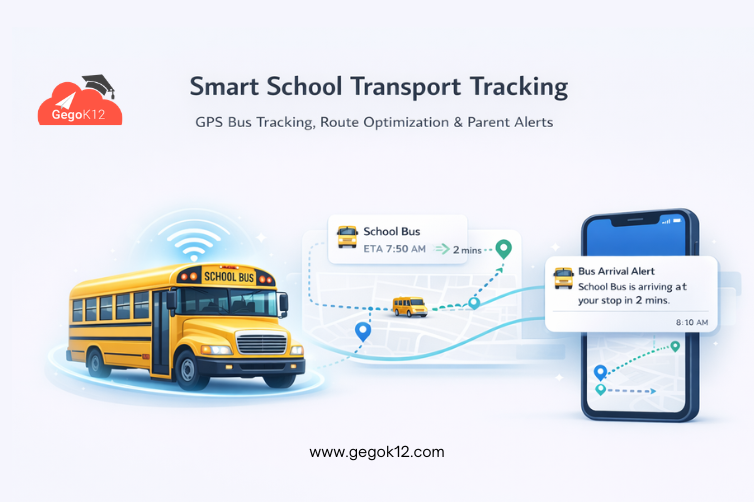
Quick Answer: A school transport management system is a comprehensive platform that manages school bus routes, tracks vehicle locations in real-time via GPS, monitors driver performance, sends automated pickup/drop notifications to parents, optimizes routes for fuel efficiency, and maintains complete safety compliance records — reducing transport costs by 20-30% while dramatically improving parent confidence in student safety.
School transportation represents one of the most operationally complex and safety-critical aspects of education administration. Parents entrust schools with their children’s safety during daily commutes, making transport reliability and security paramount concerns. Yet many schools still manage transport operations through spreadsheets, manual route planning, and phone-based parent communication — creating inefficiencies, safety gaps, and constant parent anxiety about whether buses are running on time.
With over 17,000 school transport accidents annually in India and 89% of parents citing transport safety as a primary school selection factor, robust transport management has evolved from operational convenience to absolute necessity. Modern school transport management systems reduce transport operating costs by 20-30% through route optimization, improve parent satisfaction by 60-70% through real-time tracking and notifications, and create comprehensive safety documentation protecting schools from liability while ensuring student wellbeing.
This comprehensive guide explains how modern transport management systems work, what features distinguish effective platforms from basic GPS tracking, and how GegoK12’s integrated school bus management module delivers complete transport automation without expensive per-vehicle licensing costs.
The Critical Challenges of Manual Transport Management
Safety and Communication Gaps
No Real-Time Location Visibility: Parents have no way to know where buses are, whether they’re running late, or when to expect their child’s arrival. This information gap creates anxiety and practical problems — parents waiting at stops unnecessarily or missing pickups because buses arrived earlier than expected.
Delayed Emergency Communication: When accidents, breakdowns, or route delays occur, schools struggle to notify all affected parents quickly. Manual phone calls to hundreds of families consume hours while parents worry about unexplained delays.
Driver Accountability Issues: Without GPS tracking and monitoring, schools cannot verify whether drivers follow assigned routes, maintain appropriate speeds, or operate vehicles safely. This lack of oversight creates liability exposure and safety risks.
Operational Inefficiency Costs
Suboptimal Route Planning: Manual route planning based on approximate distances and guesswork creates inefficient routes with excessive travel time, fuel consumption, and vehicle wear. Schools overspend 25-40% on fuel costs compared to optimized routes.
Vehicle Underutilization: Without data on passenger loads and route efficiency, schools may operate half-empty buses on some routes while overcrowding others, or run more vehicles than actually needed.
Maintenance Tracking Complexity: Managing maintenance schedules, service records, and regulatory compliance across 10-30 vehicles through paper records creates confusion. Missed maintenance leads to breakdowns, safety issues, and expensive repairs.
Manual Fee Collection: Tracking transport fee payments, identifying defaulters, and reconciling collections across multiple routes consumes significant administrative time while creating collection delays.
Compliance and Liability Risks
Schools must demonstrate compliance with transport safety regulations — vehicle fitness certificates, driver license verification, insurance validity, route approvals. Paper-based compliance documentation creates audit risks and potential liability if regulatory gaps exist.
GegoK12’s transport management platform addresses every challenge through GPS integration, route optimization algorithms, automated parent communication, and comprehensive compliance tracking.
How School Transport Management Systems Work
Modern school transport management systems integrate multiple capabilities:
GPS Vehicle Tracking
Schools install GPS devices in all transport vehicles, transmitting real-time location data to the central management platform. Administrators monitor live vehicle locations on digital maps, viewing entire fleet status simultaneously.
Parents access tracking through mobile applications, seeing their child’s bus location in real-time with estimated arrival times at their stop. This visibility eliminates parent anxiety while reducing unnecessary phone inquiries to school offices.
Intelligent Route Planning
Route optimization algorithms analyze student addresses, school location, road networks, and traffic patterns to create efficient routes minimizing total travel time and fuel consumption.
The system considers multiple factors:
Student Clustering: Grouping nearby students into common pickup points rather than door-to-door service where practical.
Time Windows: Ensuring all students reach school before start time while minimizing early arrivals requiring extended supervision.
Vehicle Capacity: Distributing students across available vehicles without overcrowding while avoiding underutilization.
Traffic Patterns: Accounting for typical morning and afternoon traffic congestion when planning route timing.
Many schools report 20-30% reduction in total fleet kilometers traveled after implementing optimized routing compared to manually planned routes.
Automated Parent Notifications
The system sends automatic notifications triggered by transport events:
Morning Departure: “Bus [Number] has started from depot and will reach your stop in approximately [Time].”
Approaching Stop: “Bus [Number] is 5 minutes from your pickup location.”
Student Pickup: “Your child [Name] has boarded bus [Number] at [Time].”
Approaching School: “Bus [Number] is arriving at school in 10 minutes.”
Afternoon Departure: “Bus [Number] has departed school and will reach your stop in approximately [Time].”
Student Drop: “Your child [Name] has been dropped at [Location] at [Time].”
This comprehensive notification sequence keeps parents informed throughout entire daily transport cycle, dramatically reducing anxiety and phone inquiries.
Driver and Attendant Management
The system maintains complete staff profiles:
Driver Credentials: License numbers with expiration tracking, medical fitness certificates, police verification documents, training certifications.
Attendance Tracking: Digital attendance recording which drivers and attendants staffed which vehicles each day.
Performance Monitoring: GPS data reveals speeding incidents, harsh braking events, route deviations, or extended stops — all indicators requiring driver counseling.
Assignment Management: Scheduling which drivers operate which routes, managing leave requests, and ensuring adequate backup staff availability.
Vehicle Maintenance Tracking
Comprehensive maintenance management prevents breakdowns and ensures safety:
Service Scheduling: Automated reminders for periodic servicing based on kilometers traveled or elapsed time since last service.
Repair History: Complete records of all repairs, parts replaced, costs incurred, and servicing vendors used.
Compliance Documents: Digital storage of fitness certificates, insurance policies, pollution certificates, and permit documentation with expiration alerts.
Fuel Consumption: Tracking fuel consumption by vehicle, identifying outliers suggesting maintenance needs or driver behavior issues.
Transport Fee Management
Integrated fee handling specifically for transport:
Route-Based Fee Calculation: Automatic fee assignment based on student route allocation and distance traveled.
Payment Tracking: Real-time visibility into which families have paid transport fees versus outstanding amounts.
Digital Collection: Parents pay transport fees through the same online payment system used for academic fees, creating unified payment experience.
Usage Monitoring: Tracking actual transport usage versus paid fees, identifying students not using paid transport services.
Essential Features of Effective Transport Systems
Multi-Level Access Control
Different stakeholders need different information:
Parents: See only their child’s bus location and notifications — no access to other students or fleet-wide data.
Drivers: Access their assigned route details, student lists, attendance marking interface.
Transport Coordinators: Monitor entire fleet, manage routes, handle parent inquiries, oversee driver performance.
Administrators: Access comprehensive reports, compliance tracking, cost analysis, and strategic planning data.
GegoK12’s role-based permissions ensure appropriate access while maintaining data privacy and security.
SOS and Emergency Protocols
Safety emergencies require immediate response:
Driver Panic Button: Drivers trigger emergency alerts from vehicle GPS devices when facing threats, accidents, or medical emergencies.
Emergency Contact Cascade: System automatically notifies school administrators, transport coordinators, and designated emergency responders when SOS activates.
Incident Documentation: Digital forms for recording accident details, witness information, insurance claims, and follow-up actions.
Route Modification Management
Routes change due to new student enrollments, relocations, or operational adjustments:
Dynamic Route Updates: Modify routes by adding/removing stops, changing sequences, or reassigning students between routes.
Parent Notification: Automatically inform affected parents when route changes impact their children.
Impact Analysis: System shows how proposed changes affect travel time, vehicle capacity, and operational costs before implementation.
Geofencing and Stop Verification
Virtual boundaries ensure operational compliance:
School Zone: Geofence around school triggers automatic “arrived at school” notifications when vehicles enter.
Stop Locations: Virtual boundaries at each pickup/drop point verify drivers stop at correct locations rather than nearby approximations.
Route Adherence: Alerts when vehicles deviate significantly from planned routes, suggesting unauthorized detours or getting lost.
Implementation Strategy: Deploying Transport Management
Phase 1: Route and Vehicle Setup (Week 1-2)
Vehicle Registration: Enter complete vehicle information — registration numbers, capacity, GPS device IDs, insurance details, fitness certificates.
Route Definition: Map all current routes including stop locations, stop sequences, assigned students, designated vehicles, and timing schedules.
Driver Assignment: Register all drivers and attendants with credential documentation, assign to specific routes.
Technical documentation guides configuration ensuring accurate setup from initial deployment.
Phase 2: GPS Hardware Installation (Week 2-3)
Device Procurement: Acquire GPS tracking devices compatible with the management platform.
Installation: Professional installation in all vehicles with concealed mounting preventing tampering.
Testing: Verify devices transmit location data correctly, trigger geofence events appropriately, and maintain reliable connectivity.
Phase 3: Parent Onboarding (Week 3-4)
Communication Campaign: Inform parents about new tracking and notification capabilities.
App Installation: Guide parents through mobile app installation and registration for real-time tracking access.
Training Materials: Distribute guides explaining how to track buses, interpret notifications, and report issues.
Video tutorials provide visual instruction supporting parent onboarding.
Phase 4: Driver Training (Week 4)
System Orientation: Train drivers on GPS tracking, automated notifications, and performance monitoring.
Attendance Procedures: Teach drivers how to mark student attendance during pickup/drop using mobile interfaces.
Emergency Protocols: Ensure drivers understand SOS activation procedures and emergency response expectations.
Phase 5: Pilot and Full Launch (Week 5-6)
Pilot Routes: Launch with 2-3 routes before fleet-wide deployment, identifying any operational issues requiring resolution.
Parent Feedback: Gather early user feedback on notification timing, tracking accuracy, and communication clarity.
Full Deployment: After successful piloting, activate remaining routes with confidence in system reliability.
Transport Systems for Indian Schools
Indian Road Network Integration
GegoK12’s route optimization works with Indian road networks, understanding local traffic patterns, road quality variations, and typical congestion periods specific to Indian cities.
Safety Compliance for Indian Regulations
The system supports compliance with Central Motor Vehicles Rules requirements for school transport — attendant verification, speed governors, emergency exits, first aid kits, and fitness certification tracking.
Multi-Language Support
Parents receive notifications in preferred languages — Hindi, regional languages, English — ensuring universal accessibility across India’s linguistic diversity.
Integration with Indian Payment Methods
Transport fee collection supports UPI, net banking, and digital wallets preferred by Indian parents, creating frictionless payment experiences.
FAQs
Q: What happens if GPS connectivity is lost temporarily?
A: Devices store location data locally during connectivity interruptions, uploading automatically when connection restores. Parents see last-known location with timestamp indicating data age. System alerts administrators to extended connectivity losses requiring device troubleshooting.
Q: Can parents track buses if they don’t have smartphones?
A: Yes. Parents access tracking through web browsers on any device. Additionally, automated SMS notifications provide key updates even without app installation or internet access.
Q: How accurate is GPS tracking in urban environments with tall buildings?
A: Modern GPS devices achieve 5-10 meter accuracy in typical conditions. Urban canyon effects may temporarily reduce precision but don’t prevent reliable tracking. The system displays accuracy confidence levels helping parents interpret location data appropriately.
Q: What security prevents unauthorized people from tracking school buses?
A: Access requires authenticated login tied to specific student enrollment. Parents see only their child’s bus — no access to other vehicles. The system logs all access attempts, identifying suspicious activity for investigation.
Conclusion: Transform Transport from Liability to Competitive Advantage
The school transport management system represents one of the most visible, parent-valued digitization investments schools can make. Real-time tracking, automated notifications, route optimization, and comprehensive safety management transform transport from operational burden and liability concern into competitive differentiator that influences enrollment decisions.
GegoK12’s comprehensive open-source platform provides complete transport management integrated with all school operations — free under the MIT license, with professional support available for implementation.
Parent peace of mind is priceless. GPS tracking and automated communication deliver that peace while reducing operational costs and improving safety.
Explore GegoK12’s transport features, download the platform, review implementation guides, or contact the team to discuss your transport management requirements.
Transform student transport today. Choose safety. Choose efficiency. Choose GegoK12.